
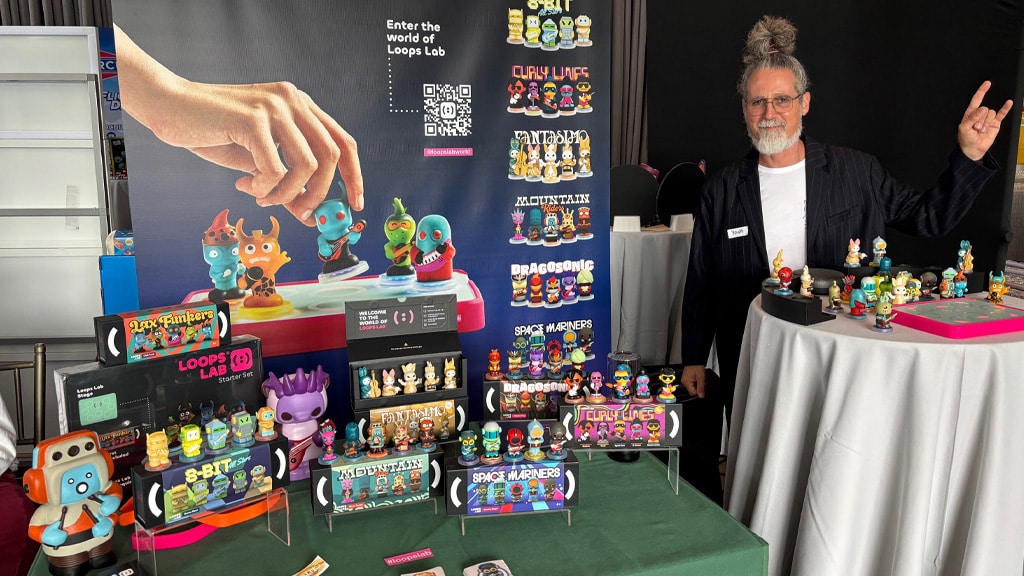
Music is a universal language, and the team behind Loops Lab hopes kids around the world can communicate with it. With the brand, which features musical figurines, an interactive stage, and an app, kids can learn about different musical genres — and become the household DJ.
Aspiring musicians and producers select a Loops Lab figurine and place it anywhere on their Loops Stage to hear the corresponding beat or rhythm loop. Kids — or Loopsters — can then create layered melodies and songs as they add, replace, or remove different musical figures. While families need a smart device and the Loops Lab app to listen to their completed tracks, the play experience is hands-on and screen-free.
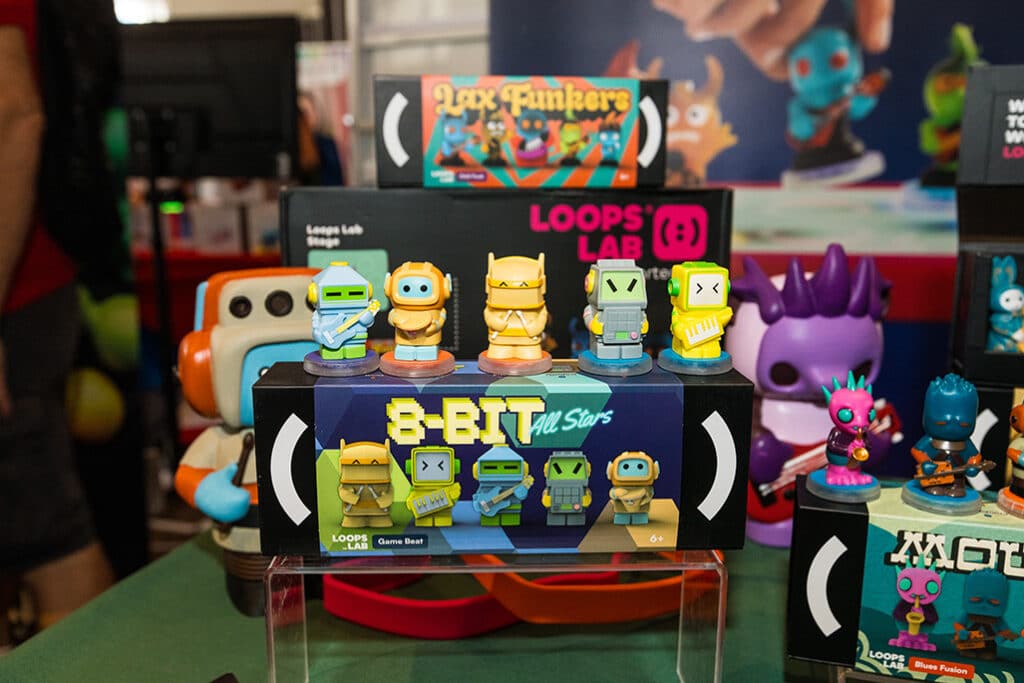
The figurines have detailed designs, backstories, and characteristics. These genre-specific figures wear different outfits, hold tiny instruments, and bring varying rhythms to the stage. Kids can currently choose from classical music (featured in the Fantasimo set), Blues Fusion (from the Mountain Riders set), Electro Rock (played by the Space Mariners), and more, across Bands (five figurines) and Solos (individual figures). Late last year, Loops Lab introduced its first seasonal set, Christmas Duos, featuring Santa Claus and a rockin’ reindeer.
Following the toy line’s U.S. debut at Toy Fair New York last year, Loops Lab Owner Yona Segev looks forward to expanding the brand internationally with new bands, inspiring more music-driven playtime. With genres like K-Pop and Country cued up on the playlist, Segev aims to unite families and communities through musical play. We caught up with Segev to learn more about the brand’s success and what’s next
Loops Lab combines physical and digital play. What design considerations bring kids the highest quality of phygital play?
I think the main concept behind the design is accessibility. It means we wanted it to be easy and accessible, for both musicians and non-musicians, as well as children and adults. And we want the interface to be something that allows experimentation and welcomes everybody to be part of the play, so that was the guiding line in terms of technology and desires … We [also] want a very immediate response. So, we have the magnets and the feedback — and even the quickness with which the product reacts in real-time — it affords a certain feeling that you are controlling it at the time it’s happening. So you can play it almost like an instrument.
How does Loops Lab differ from other musical toys on the market?
I think toys are a way for children to experiment with the world with less or no consequences. Loops Lab is still a toy; it’s not full-on DJ gear. The things that differentiate it are, first of all, the technology, and having that engine behind it allows it to be more adaptive … Whatever you do, whatever you place on the board, is going to be a positive and encouraging experience. It might also provide a relatively easy entry into the music world. You can play and explore.
Why is it important for kids to be introduced to different genres?
Mixing up genres, which is something you can do with our instrument, could be really satisfying. In the company, there are many musicians … We believe that by combining different types of music and bringing them together, we help people come together.
You also founded toi.lab. How does this role impact Loops Lab?
Toi.lab is focused on the future of play. Toi.lab is a facility that enables toy creators to develop prototypes and toys that require advanced technology. As the founder of toi.lab, I helped numerous companies develop a wide range of toys, and we had a few technological innovations emerge from toi.lab. So, Loops Lab is a part of that vision. Another aspect of toi.lab is that we aim to create technology-driven toys, but without screens. It’s not that we’re against screens; screens are great, but there are great people doing screens. We decided we wanted to be screen-free, and that was a big factor in the design of Loops Lab. It’s not about what’s happening on the screen; it’s about the physical aspects of play.
Stay on the Pulse of Play!
A version of this feature first appeared in the 2026 International Issue of The Toy Book. Read the full issue here!
Want The Toy Book delivered straight to your desk? Subscribe today and get seven big issues a year — packed with the stories, trends, and insights that keep you on the #pulseofplay.
