After a year marked by tariffs, volatility, political chaos, and broader economic concerns that pressured consumer confidence and retail inventories, the U.S. toy industry still managed to come out ahead.
Now, The Toy Book brings together a panel of industry leaders, including manufacturers and retailers — energized, inspired, and focused on the positive — to discuss the trends, wins, challenges, and opportunities shaping the industry as the road through 2026 winds on.
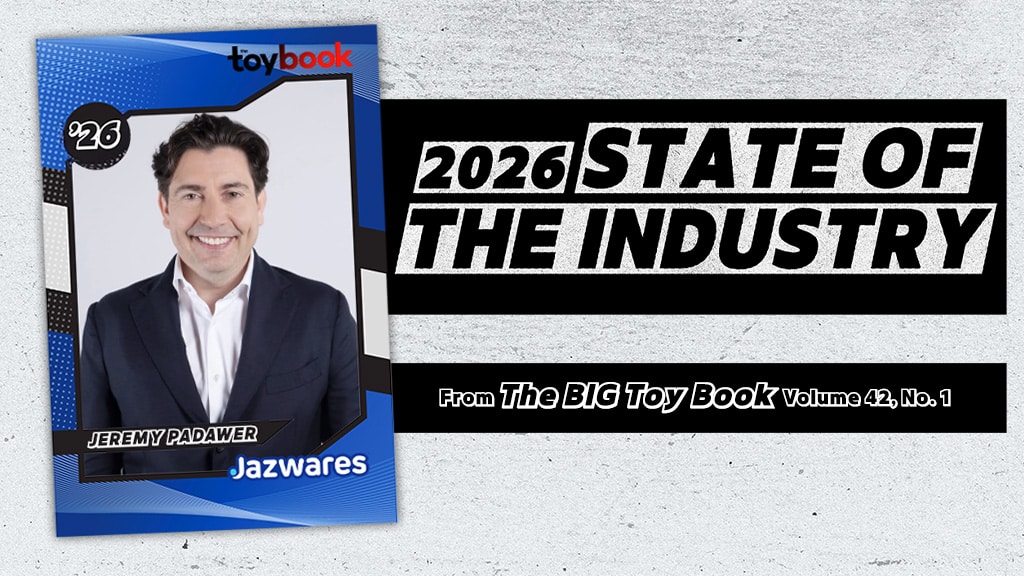
Jeremy Padawer, Chief Brand Officer and incoming President of the Pulse of Play Award-winning Jazwares, kicks things off, weighing in on three important questions.
How are entertainment, gaming, and influencer-driven brands shaping the business this year?
Content has never been so prolific or fragmented. Until approximately 2005, video game IP was considered very much secondary in the toy industry. A few brands were considered A-level, but those that reached that upper echelon only did so for a moment in time.
Today, gaming has taken on an entirely different role in toys and collectibles, but when I talk about gaming, I’m no longer just talking about video games… I’m talking about trading card games [TCG]. Disney Lorcana, Magic: The Gathering, Pokémon, One Piece, and so many other TCG properties are hitting sales levels never considered possible. Adult collectors and their desire to show off fandom and collect for secondary-market value drive much of traditional video game IP in the toy aisle; many of the same motivations do so in TCG.
Lastly, influencer-driven brands have been hit-or-miss in toys and collectibles. MrBeast has been a standout success, while so many others have had either a brief moment in the sun or none at all. It’s truly hit or miss. There are simply too many players on the field to allow every single one to hit.
How is Jazwares approaching speed to market in fast-moving categories?
We’ve always been early. If the toy industry were a cake, it would be two parts evergreen and one part trend. We specialize in independently owned IP distributed on new frontiers. You must act quickly — not just to sign, but also to manufacture. That’s the nature of trend. If you aren’t first to the table, and you aren’t fast to tool, manufacture, and distribute, then you’re baking with only one of the two key ingredients for success in the toy industry.
What do you see as the biggest challenges and opportunities for toy retailers across North America?
There are plenty of both. Some are macroeconomic in nature, and I’m not going to address those. They are geopolitical and way above my pay grade. The biggest challenge retail faces daily, which I will discuss, is balancing safe bets with new opportunities. Without a Toys “R” Us with 1,000 stores singularly focused on toys, we tend to bend toward so much safety at mass. Innovation always drove excitement. We’re starved for it. Every year, people would ask me the same question, “What’s the hot new toy this year?” I feel like we’ve lost some of that in this era. My hope for the toy industry in the chapter ahead is that we embrace the magic and innovation of toys and that we take bigger bets together.
Stay on the Pulse of Play!
A version of this feature first appeared in the 2026 edition of The BIG Toy Book. Read the full issue here!
Want The Toy Book delivered straight to your desk? Subscribe today and get seven big issues a year — packed with the stories, trends, and insights that keep you on the #pulseofplay.