For the past two years, The Toy Book pegged 2025 as a return to growth for the U.S. toy industry, and early data proves that true, but will tariff troubles create a falloff in the back half?
Circana reported a 6% increase in U.S. toy industry dollar sales through April 2025, with units sold up 3% compared to the same period last year. The toy industry was the fastest-growing sector tracked by Circana, fueled by new Pokémon releases and collectible sports trading cards.
“The toy industry is showing its resiliency during a turbulent time, but will need to nimbly adapt to a retail landscape of polarized consumers and ongoing inflation concerns,” says Juli Lennett, Vice President and Toy Industry Advisor at Circana. “The good news is consumers are signaling that they will spend on the things they need and those that make them happy. For the toy industry, this can range from buying toys for themselves or as special occasion gifts for loved ones. What toy they opt for, how many they are purchasing, and where they are shopping, however, are all factors that might look different moving through 2025. My general advice to the industry is to monitor the calm but prepare for change.”
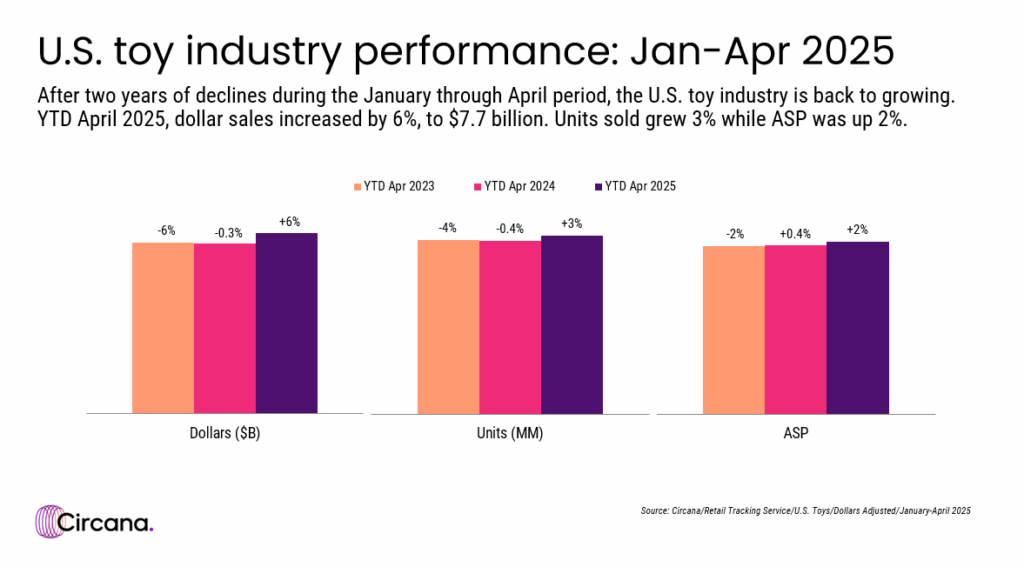
According to Circana’s Retail Tracking Service, eight of the 11 supercategories posted dollar growth. Games and Puzzles, along with Explorative Toys, led the charge thanks to strong sales of trading cards like Pokémon, One Piece, NFL, and MLB. Other bright spots included Building Sets, Action Figures, Arts and Crafts, Youth Electronics, Infant/Toddler/Preschool Toys, and Vehicles.

Adult consumers are powering this momentum. In Q1 2025, toy sales for adults 18 and older jumped 12% year-over-year, reaching $1.8 billion — the highest spending among all age groups, per Circana’s Checkout data.
Pokémon’s popularity shows no signs of slowing. Nearly 1 in 5 adults bought Pokémon cards for themselves in the past six months, with most collecting or displaying rather than playing, according to Circana’s March Omnibus Survey.
Tariffs and pricing trends continue to polarize the market. Higher-priced segments ($20–69.99) and sub-$15 toys saw gains, while the middle tier lagged. A third of consumers surveyed for Circana’s Future of Toys study said they’d switch to cheaper toys if tariffs hit, while another third would pay the higher prices.